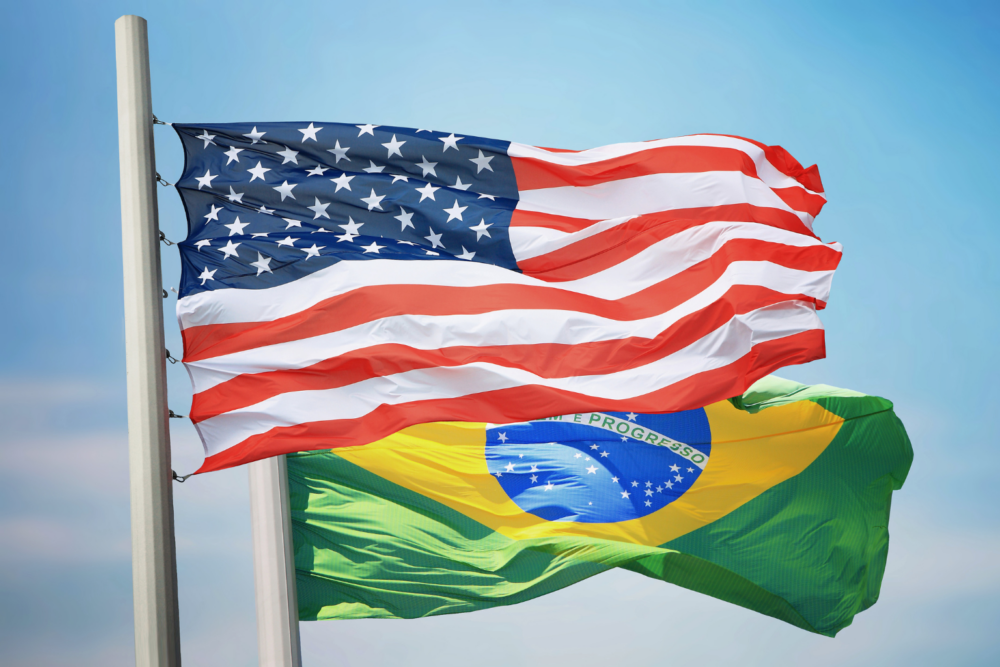
The U.S. Department of State has designated the Primeiro Comando da Capital (“PCC”) and the Comando Vermelho (“CV”) as Foreign Terrorist Organizations (“FTOs”), effective June 5, 2026, and as Specially Designated Global Terrorists (“SDGTs”) as of the date of the announcement. Although the measure is enforced by the United States government, its effects extend well beyond American borders.
Public debate has focused on national sovereignty and the conceptual appropriateness of the designation — both legitimate and relevant concerns. The Brazilian government has criticized the measure, arguing that these organizations are economically, not ideologically, motivated, and that unilateral, non-negotiated measures may undermine law enforcement cooperation and affect the national financial system.
Regardless of the technical merits of the designation, there is a more pressing question for the business community: what does this classification require, in practice, from companies with ties to the United States?
The FTO designation triggers the federal criminal regime for material support under U.S. law. As a result, the provision of financial resources, goods, services, training, transportation, documentation — and, under certain circumstances, even legal advice — to designated organizations may be criminalized.
The reach is extraterritorial: conduct is punishable in the United States regardless of where it takes place, provided it involves a violation that occurred in or affects the interests of U.S. parties — even when the perpetrator is not a U.S. national.
In parallel, inclusion on the SDGT list may lead to the listing of a company on the Specially Designated Nationals and Blocked Persons (“SDN”) list maintained by OFAC (the Office of Foreign Assets Control), enabling the freezing of assets and prohibiting transactions with any person acting on behalf of or for the benefit of designated organizations.
Against this backdrop, there are five primary risk vectors for companies operating with U.S. ties:
Companies with U.S. operations, access to the U.S. dollar-denominated financial system, or American counterparties must urgently review their screening programs for clients, suppliers, and business partners. OFAC’s framework is objective: a failure to screen — even an unintentional one — may result in significant fines and loss of access to the international banking system. Knowledge of the connection is not required for exposure; it suffices that a transaction directly or indirectly benefits a designated person and that the company’s negligence can be established.
Particularly exposed sectors include financial services and payment systems, logistics and transportation, retail, construction, agribusiness and agro-industrial supply chains, fuels, entertainment, and pharmaceuticals.
Transactions involving assets or operations in regions with a known presence of the PCC or CV will require additional investigative scrutiny. U.S. investors and lenders — private equity funds, investment banks, and international financiers — will increasingly incorporate this concern into their due diligence questionnaires. Companies that cannot demonstrate robust controls over their exposure to organized crime will face growing difficulties in closing fundraising rounds, issuing debt abroad, or completing transactions with American buyers.
One specific issue warrants attention: the possibility, noted by experts, that criminal organizations may themselves be undisclosed investors in ostensibly legitimate companies. This raises the bar for investigating corporate ownership structures and ultimate beneficial owners in M&A processes and foreign investments in Brazil.
The risk is not confined to direct involvement in unlawful activities. Companies whose suppliers, subcontractors, logistics operators, or service providers operate in territories or sectors under strong PCC or CV influence may face scrutiny regarding their internal controls and ongoing third-party monitoring programs. The absence of documented vendor due diligence procedures may serve as a basis for liability, particularly in the context of investigations conducted by U.S. authorities.
One dimension deserves particular attention from the legal profession: the FTO designation creates a real risk for attorneys who represent members of these organizations in proceedings before U.S. authorities. The material support statute provides an exception for what it calls “independent advocacy,” but it remains unclear as to legal advice and the point at which counsel may become a party to a violation. Brazilian lawyers handling cases or clients with an international dimension will need to exercise considerable caution to avoid providing prohibited assistance to PCC or CV members — particularly outside the context of formal judicial representation.
On June 2, 2026, the Office of the United States Trade Representative (USTR) published a report concluding that Brazil’s practices related to the failure to impose and effectively enforce a prohibition on the importation of goods produced with forced labor are actionable under Section 301 of the Trade Act of 1974. Brazil is among the 60 investigated economies — accounting for 99.4% of U.S. imports — that, according to USTR, “have failed to impose and effectively enforce a forced labor import prohibition.”
The report specifically highlights Brazilian frozen beef as an illustrative case study: with forced labor documented in Brazilian cattle ranching, USTR found that Brazilian frozen beef exports to investigated economies nearly doubled between 2015 and 2025, while U.S. exports grew by only 21% over the same period. In 2025, the average unit price of frozen beef imported by the principal Asian buyer — China — was 41% lower when originating from Brazil compared to the United States. The report concludes that this price differential reflects, at least in part, the artificial cost advantage derived from forced labor.
Section 301 authorizes the USTR to take “all appropriate and feasible action” to eliminate practices deemed unreasonable, including the imposition of additional tariffs, suspension of trade concessions, and entry into binding agreements. While concrete measures are still subject to additional regulatory proceedings, the formal finding that Brazil acts “unreasonably” in trade in forced-labor goods creates a new layer of bilateral trade pressure.
For Brazilian companies with U.S. ties, this investigation has immediate practical implications. Exporters in sectors identified as high-risk — particularly cattle ranching, cotton, mining, textiles, and electronics — should anticipate heightened scrutiny from U.S. buyers and lenders regarding their supply chains. Labor compliance programs and supply chain traceability cease to be a competitive differentiator and become a prerequisite for access to the U.S. market.
The convergence of Section 301 pressure and the FTO designation of the PCC and CV reinforces a clear trend: the U.S. government is systematically raising the integrity standard required of Brazilian counterparties, both in the criminal and the commercial dimensions. Companies operating in sectors or regions where organized crime influence and forced labor overlap face a compounded regulatory risk that demands urgent attention.
The U.S. designation and the Section 301 findings come at a moment of tightening in the Brazilian legal framework as well. The recently enacted Anti-Gang Law (Law No. 15,358/2026) already establishes severe measures for companies suspected of interaction with organized crime: judicial intervention, removal of partners, compulsory dissolution, prohibition from contracting with public authorities, and joint liability of shareholders. The convergence of this new domestic framework with foreign regulatory pressure creates a high-risk environment for companies that disregard this evolving legal landscape.
Companies with ties to the U.S. market — whether through commercial or corporate relationships, or simply through access to the international financial system — should, as a matter of priority: (i) review their screening programs in light of the new SDGT list; (ii) map suppliers and counterparties in regions or sectors under the influence of the designated organizations; (iii) update ultimate beneficial owner due diligence procedures; (iv) assess the impact on ongoing or pending transactions; and (v) map their supply chains to identify and mitigate forced labor risks, particularly in sectors flagged by the USTR report.
These measures may be revisited by the U.S. government, and the broader geopolitical context will undoubtedly influence both the adoption and removal of such designations. However, given that they remain in effect — and in light of the current U.S. regulatory trajectory — it is essential that companies take the necessary precautions with urgency.

This content is available only in Portuguese.
This content is available only in Portuguese.

This content is available only in Portuguese.

This content is available only in Portuguese.

This content is available only in Portuguese.
This content is available only in Portuguese.
Copyright © 2026 IWMelcheds. All rights reserved - Política de Privacidade